Best CRM: A Practical Way to Choose One in 30 Days
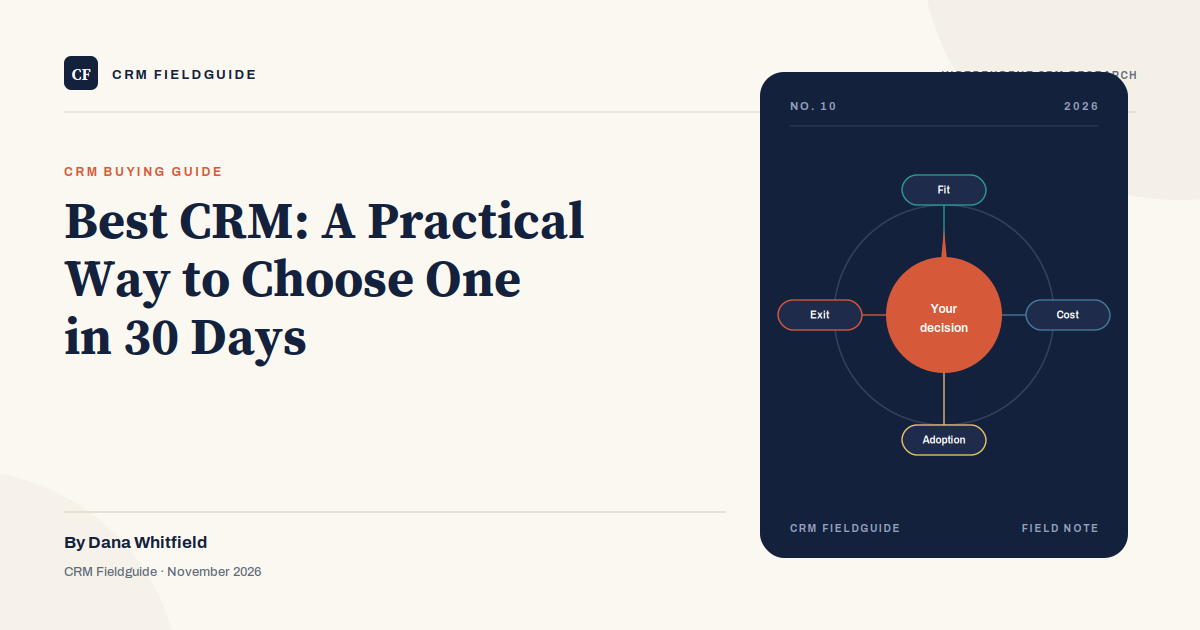
Most CRM searches end with a list of logos. This one starts with your sales process, your budget, and the exit plan you will wish you had negotiated.
Independent CRM reviews for US small businesses
 Dana Whitfield
Most CRM searches end with a list of logos. This one starts with your sales process, your budget, and the exit plan you will wish you had negotiated.
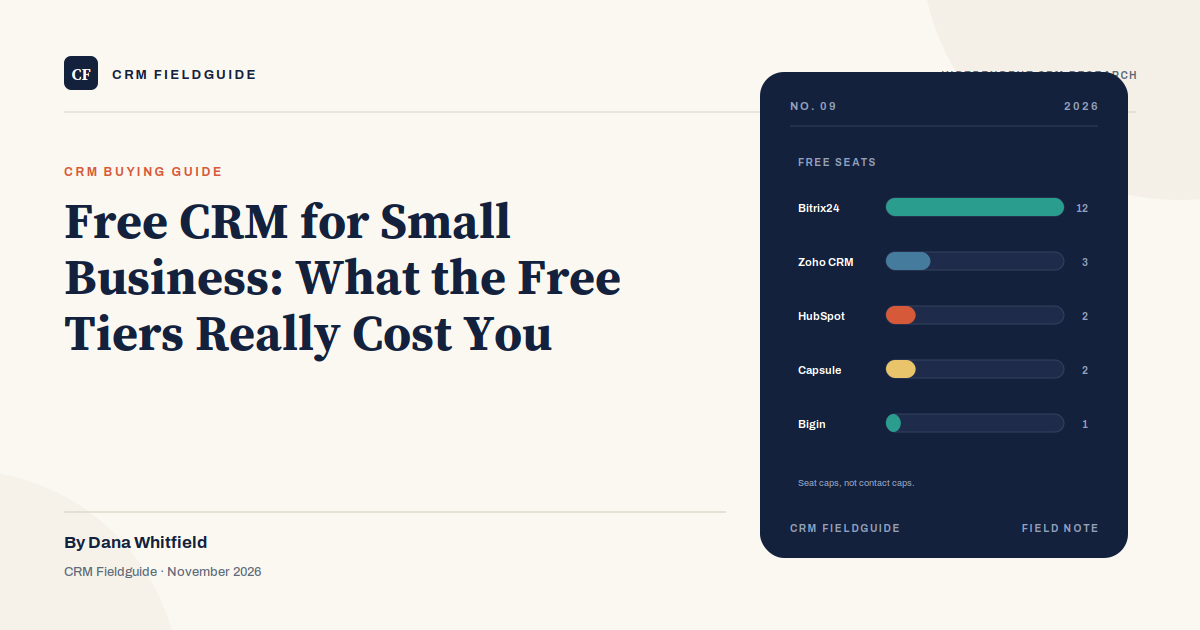
A free CRM can carry a two-person sales team a long way. The trick is knowing which cap will stop you, and what the upgrade will cost when it does.
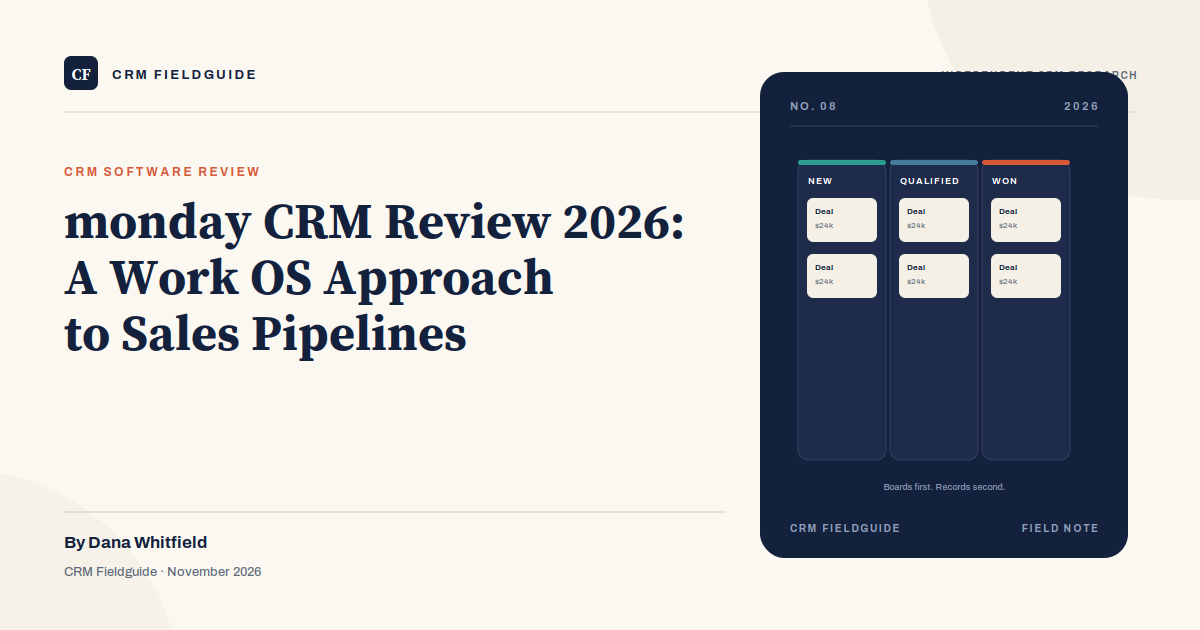
monday CRM is less a traditional CRM and more a sales pipeline built on monday.com’s board engine. That is either exactly what you want or a warning sign.
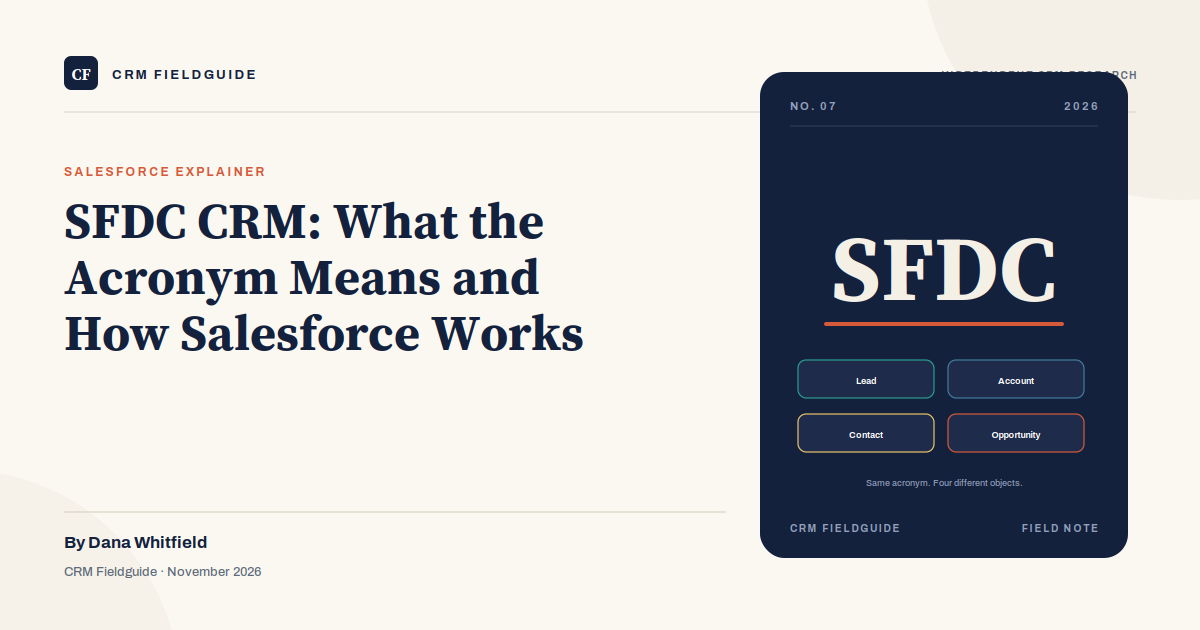
SFDC is shorthand for Salesforce, but the platform behind the acronym is a set of objects, permissions, and automation rules. Here is the mental model that makes it click.
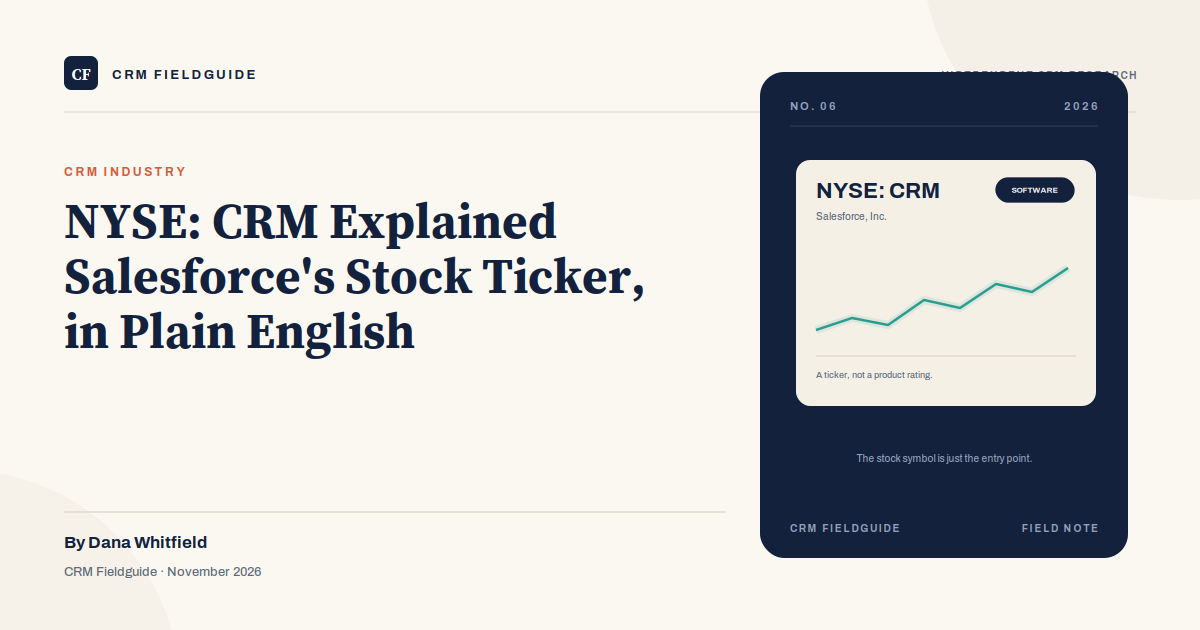
CRM is both a software category and a New York Stock Exchange ticker. Here is what the ticker represents, what moves it, and why a CRM buyer should care.
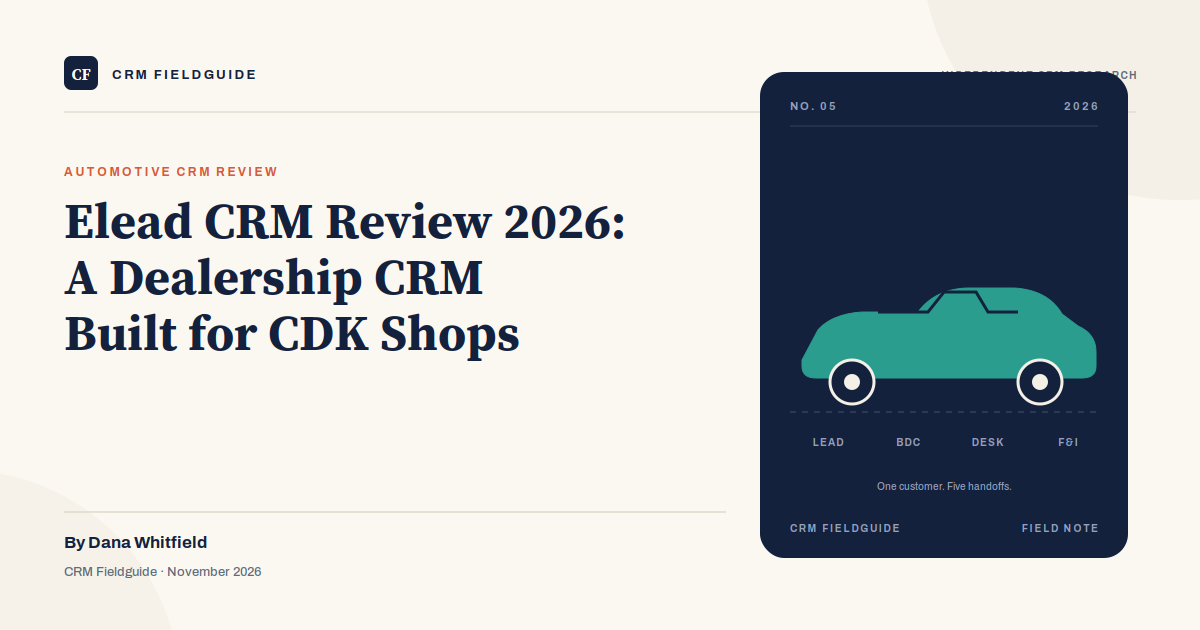
Elead is not a general-purpose CRM with a car icon. It is a dealership operating system tied to CDK’s DMS. Here is where it wins, where it locks you in, and who should look elsewhere.
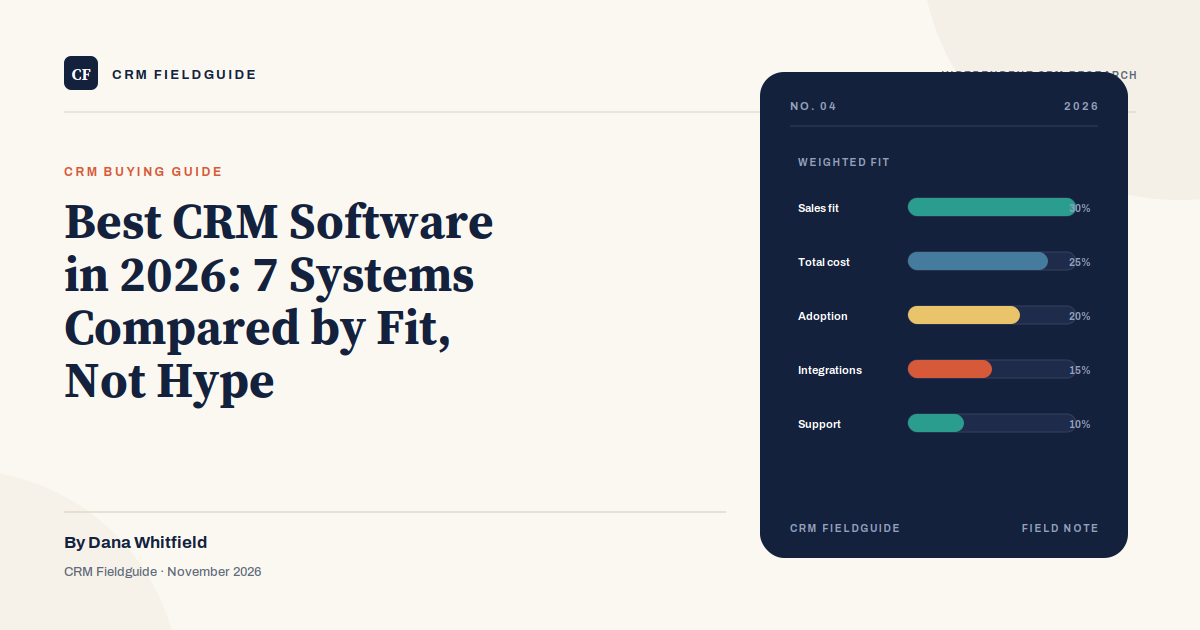
There is no single best CRM. There are seven good ones, each with a different idea of how sales should work. Here is how to match the tool to your team.
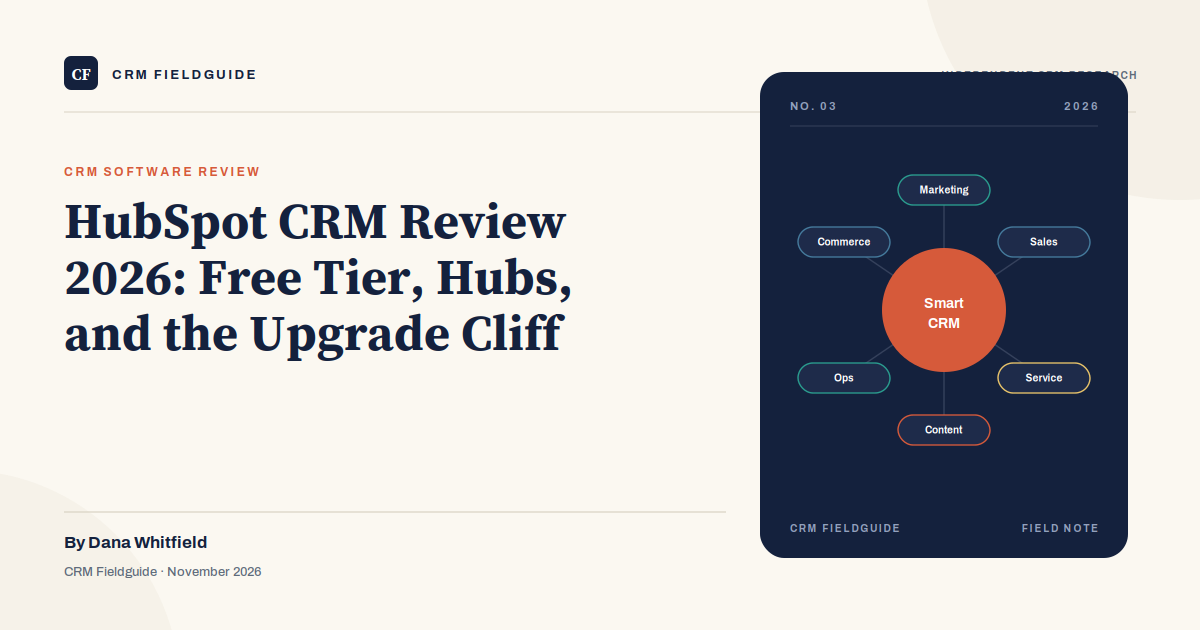
HubSpot’s free CRM is genuinely useful. The question is what happens when your team grows into the paid tiers. A clear-eyed look at limits, pricing, and fit.
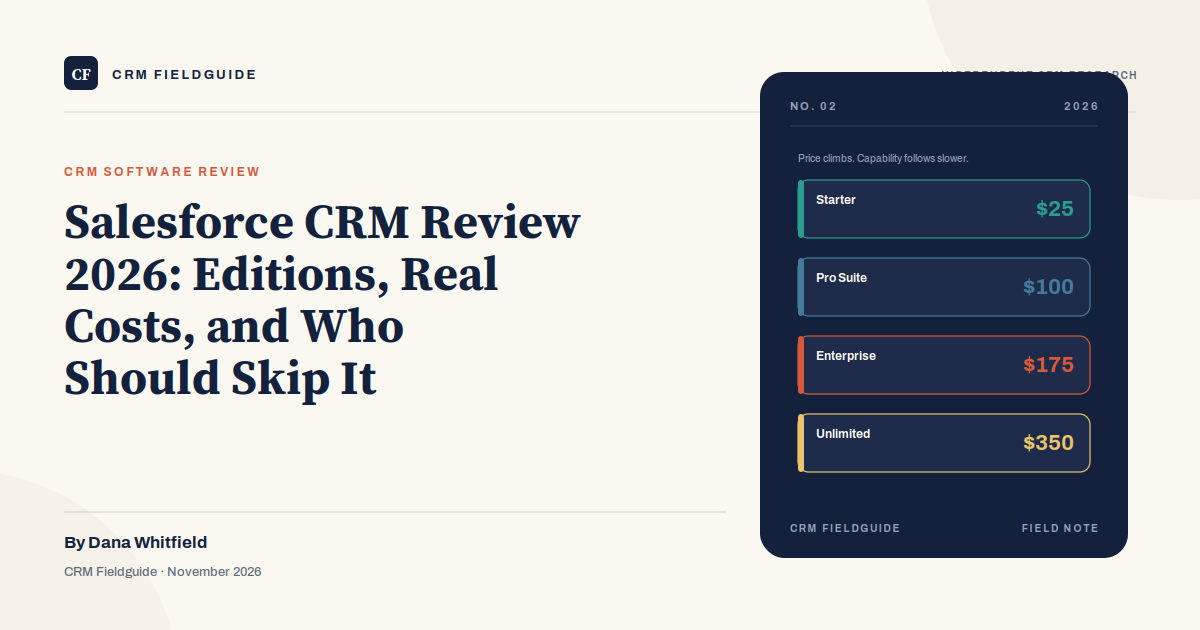
Salesforce is the most capable CRM on the market and the easiest one to overspend on. A practical look at editions, implementation costs, and the teams that should choose something else.
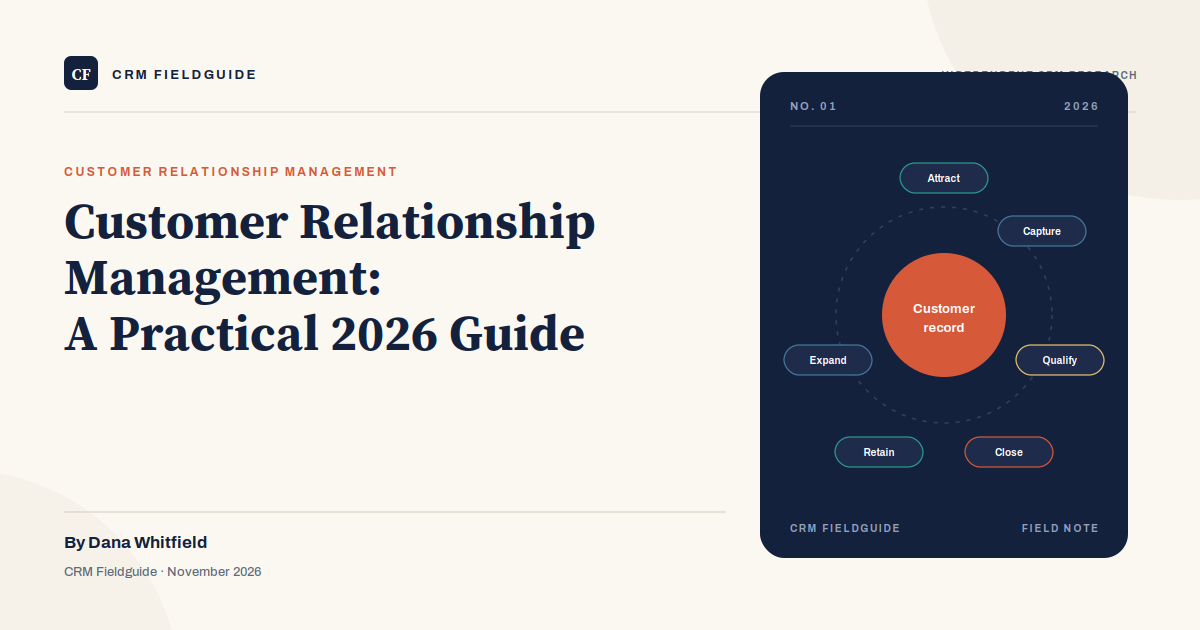
CRM is not a database with a login. It is the system your sales team uses to decide who to call next. Here is how it works, what to measure, and where implementations fail.